
Orthodontics in Küsnacht
Straight teeth and a well-balanced bite can make chewing and daily oral care easier and contribute to long-term dental health. At our practice in Küsnacht near Zurich, we treat children, teenagers and adults: with fixed and removable braces, lingual braces and clear aligners such as Invisalign.

Why orthodontics?
Misaligned teeth and jaws are more than a question of appearance. Depending on how pronounced they are, they can make biting, chewing and speaking more difficult. Crowded or overlapping teeth are harder to clean, which can increase the risk of tooth decay and gum inflammation.
Strongly protruding upper front teeth are more easily injured in a fall, and an unbalanced bite can put unfavourable strain on the teeth and jaw joints. Whether and when treatment makes sense is something we clarify with a careful examination.
Our orthodontic services

Early treatment for children
Some misalignments, such as a crossbite, can be treated in a targeted way while the jaw is still growing. The right time depends on your child’s change of teeth, not on a fixed age.
Fixed and removable braces
Removable braces and expansion plates are mainly used while the jaw is still growing. Fixed braces with brackets move the teeth in a controlled way and are suitable for teenagers and adults. Which appliance is right depends on the findings.
Invisible braces
For discreet treatment there are two options: lingual brackets on the inside of the teeth or clear aligners such as Invisalign. Depending on the findings, we also use Invisalign for children and teenagers. Read more about the benefits of Invisalign for adults.
Jaw joint therapy
Jaw pain, clicking in the jaw joint, headaches or neck pain can be signs of craniomandibular dysfunction (CMD). We examine what role tooth position and bite play. As CMD usually has several causes, working together with other specialists can be helpful.
Braces at a glance

Metal braces
The classic fixed braces: metal brackets connected by an archwire. Robust and suitable for many misalignments, but clearly visible.

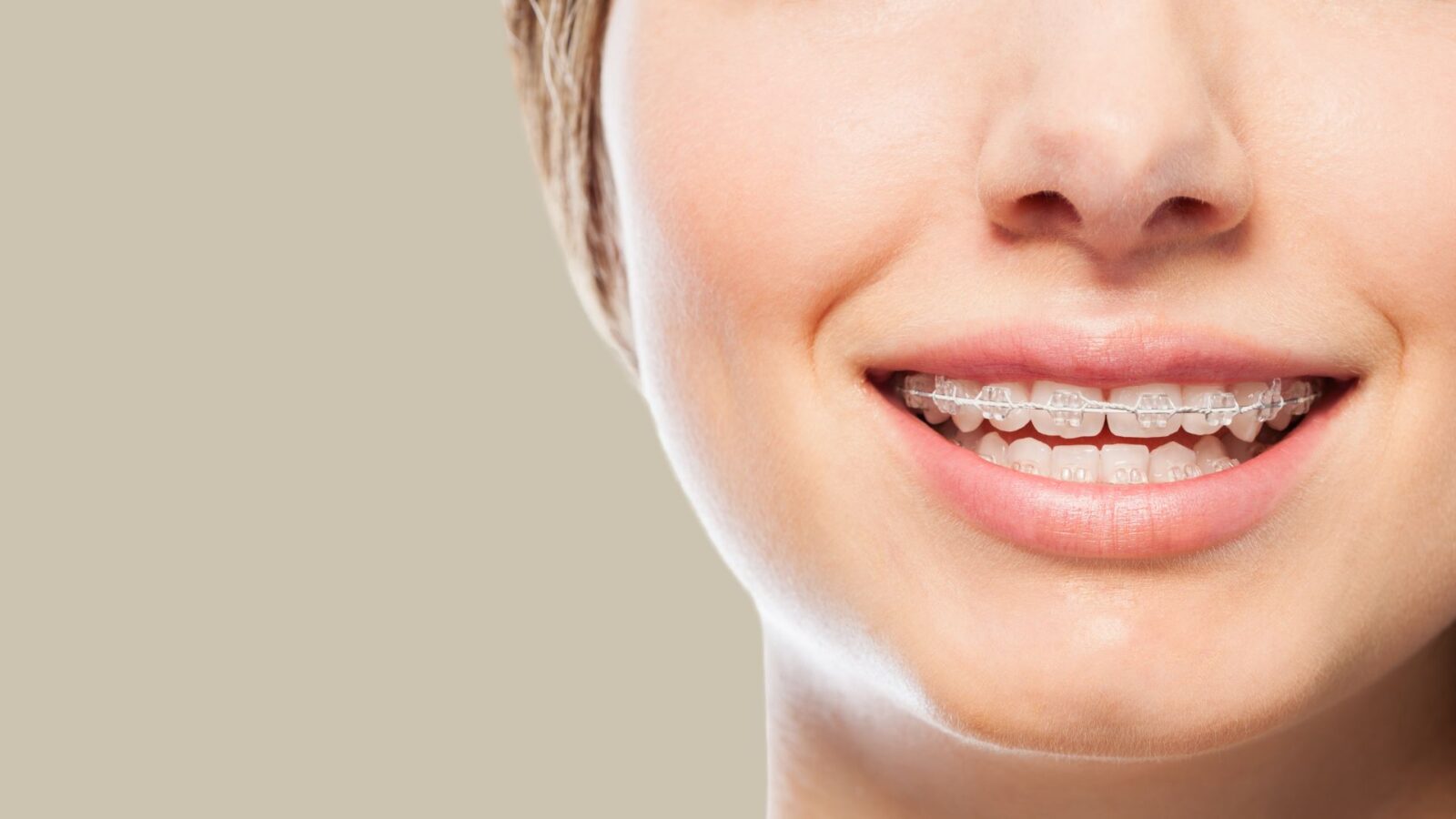
Ceramic braces
Work like metal brackets but are tooth-coloured and less noticeable. Ceramic is more brittle than metal; whether it suits your bite is something we clarify during the examination.

Lingual braces
Custom-made brackets (Incognito, WIN) on the inside of the teeth, barely visible from the outside. The tongue and speech need a little time to adjust at first.

Clear aligners
Clear, removable aligners such as Invisalign move the teeth step by step. They are worn almost around the clock and only taken out for eating and brushing.

Palatal expander
Widens an upper jaw that is too narrow, for example in the case of a crossbite, using an expansion screw. The method makes use of growth and is therefore mainly used in children.
How your treatment works
1. Initial consultation
In the first appointment, we listen to your concerns and examine your teeth, bite and jaw joints. Afterwards you know whether treatment is needed now, later or not at all.
2. Diagnostics with 3D scan and X-ray
With the iTero intraoral scanner, we capture your teeth digitally and in three dimensions. We use the scan for planning and to document progress (more about 3D scanning in dentistry).
Depending on the question, we add digital X-rays taken with the Orthophos SL 3D and, if needed, a cephalometric X-ray of the skull. This allows us to measure how the jaws are positioned in relation to each other. Read more about X-ray technology in our practice.
3. Treatment plan
Based on the findings, we discuss the suitable treatment options with you, including their advantages and disadvantages. For aligners, a digital Invisalign simulation shows how the position of your teeth could change. On request, you will receive a cost estimate in advance.
4. Active treatment
The teeth are moved step by step. At regular check-ups, we monitor progress and adjust the appliance. Thorough oral care is particularly important during this time. For anxious patients, nitrous oxide is also available if needed.
5. Retention: securing the result
After active treatment, teeth tend to shift back towards their original position. That is why we secure the result with a retainer: a fine wire bonded to the inside of the teeth or a removable aligner. How long the retainer is needed is decided individually.
Orthodontics for children and teenagers
There is no fixed date for the first braces. What matters is how far the change of teeth has progressed and how the jaws are developing:
- Primary and early mixed dentition: Early treatment is only considered for certain findings, such as a crossbite, a reverse bite of the front teeth or strongly protruding front teeth.
- Late mixed dentition: This is usually when the main treatment begins, because jaw growth can be used for the correction.
- Permanent dentition: Even after the change of teeth is complete, misalignments in teenagers can be treated well.
At the school dental check-up in our practice, we also check whether early orthodontic treatment is advisable. We accept vouchers from all municipalities for this. Read more about what we offer for children and families.
Orthodontics for adults
Teeth can be moved at any age. For adults, we include existing crowns and fillings as well as the condition of the gums in the planning. For treatment that is as discreet as possible, we offer:
- Clear aligners (Invisalign): removable and barely visible. They only work if they are worn consistently.
- Lingual braces (Incognito, WIN): custom-made brackets on the inside of the teeth, barely visible from the outside.
- Ceramic brackets: fixed braces in tooth colour, less noticeable than metal.
- Mini implants: small screws that serve temporarily as a stable anchor point in the jawbone and are removed afterwards.
Costs and insurance
The cost of orthodontic treatment depends on the starting situation, the chosen appliance and the effort involved. On request, we prepare a cost estimate in advance, for yourself or to submit to your insurer. You can find our current tariff point values on our website.
- Basic insurance: Compulsory health insurance generally does not cover orthodontic correction. Exceptions only apply to narrowly defined medical conditions.
- Swiss disability insurance (IV): For recognised congenital conditions, the IV covers the costs of the approved treatment, at the latest until the age of 20. The IV decides on a case-by-case basis. Parents register the child, if possible before treatment begins.
- Supplementary insurance: Many supplementary dental insurance policies contribute to orthodontic treatment. Benefits, maximum amounts and age limits vary widely. Check your cover with your insurer before treatment begins.
Your orthodontic team
Dr. med. dent. Sofia Bakirtzi, MSc, is a specialist orthodontist. Among other things, she is certified in the lingual systems Incognito and WIN, in clear aligners and Orthocaps, and in mini implants and skeletal anchorage. She is a member of the SSO, the DGKFO and the BDK and is recognised by the IV for orthodontic assessments.
Practice owner Dr. med. dent. Tanja Karamousli holds a Master of Science (MSc) in Orthodontics and has worked with Invisalign since 2009. She is an Invisalign Gold partner.
Frequently asked questions about orthodontics
At what age should my child have an orthodontic check-up?
There is no fixed age, because every child develops differently. If you notice crowded teeth, an unusual bite or problems with chewing, a check-up makes sense. Often the result is: keep an eye on it for now.
Do braces hurt?
After the braces are fitted and after adjustments, many patients feel pressure for a few days. It usually goes away on its own. If pain lasts longer or a wire is pressing, please get in touch with us.
How long does orthodontic treatment take?
That depends on the misalignment, the method and your cooperation, for example how consistently aligners are worn. You will receive an estimate for your case with the treatment plan.
Which braces are right for me?
That can only be said after the examination. Besides the findings, your wishes count too, for example how visible the braces may be and whether you can wear a removable solution consistently.
Termin & Beratung
Haben Sie Fragen oder möchten Sie einen Termin?
Schreiben Sie uns – wir melden uns so rasch wie möglich. Lieber direkt online buchen oder anrufen? Das geht auch.
Zahnarztpraxis Karamousli · Seestrasse 137 · 8700 Küsnacht