
Periodontitis is a chronic inflammation of the tissues that support the teeth. It usually starts without pain and, if left untreated, can lead to bone loss and tooth loss. At our dental practice in Küsnacht, we treat gum and bone disease according to a structured periodontal concept: from thorough diagnostics and systematic periodontal therapy to regular aftercare. The aim is to stop the inflammation and keep your own teeth for as long as possible.
For lasting success, your daily oral care and regular professional teeth cleaning and check-ups are just as important as the treatment itself.
What is periodontitis?
The periodontium – the tissues that support the teeth – consists of the gums, root cementum, supporting fibres and jawbone. The disease starts with bacterial plaque, known as biofilm. If it stays at the gum line, the gums become inflamed first. This gum inflammation is called gingivitis. It is usually reversible if the plaque is removed consistently.
If the inflammation persists, it can spread to the deeper structures. Gum pockets form between the tooth and the gum, where more bacteria settle, and the bone around the tooth root gradually breaks down. This is known as periodontitis, often colloquially called «periodontosis». Bone that has been lost does not grow back on its own. With systematic therapy, however, the disease can usually be brought to a standstill.
Warning signs: what to look out for
Periodontitis often develops over years without causing pain. Regular check-ups therefore make sense even if you have no symptoms. You should have the following signs checked by a dentist:
- bleeding gums when brushing your teeth or cleaning between them
- red or swollen gums
- persistent bad breath
- receding gums, teeth that look longer or exposed tooth necks
- loose teeth or teeth that change position
Causes and risk factors
The main cause is the bacterial biofilm on the teeth, especially at the gum line and in the spaces between the teeth. How quickly the disease progresses depends on other factors:
- Smoking: Smokers develop periodontitis more often and usually respond less well to treatment.
- Diabetes: Poorly controlled blood sugar increases the risk of periodontitis.
- Oral hygiene: Plaque that is left behind, especially between the teeth.
- Immune defences and lifestyle: a weakened immune system, stress and an unbalanced diet.
- Predisposition: Susceptibility is also partly hereditary.
You can influence some of these factors yourself. Stopping smoking and good blood sugar control are therefore part of periodontitis therapy.
Periodontitis and general health
Periodontitis and diabetes affect each other: diabetes favours periodontitis, and untreated periodontitis can make it harder to control blood sugar. Studies show that long-term blood sugar levels (HbA1c) can improve after periodontitis treatment.
Links with cardiovascular disease, respiratory disease and pregnancy complications have also been described. Please therefore let us know about any general medical conditions, such as diabetes, and about any medication you take.
Diagnosis: how we assess your condition
We start with a thorough examination. Using a fine probe, we measure the depth of the gum pockets at several points on each tooth and record where there is bleeding on probing. Pockets of around 4 millimetres or more that bleed indicate active inflammation.
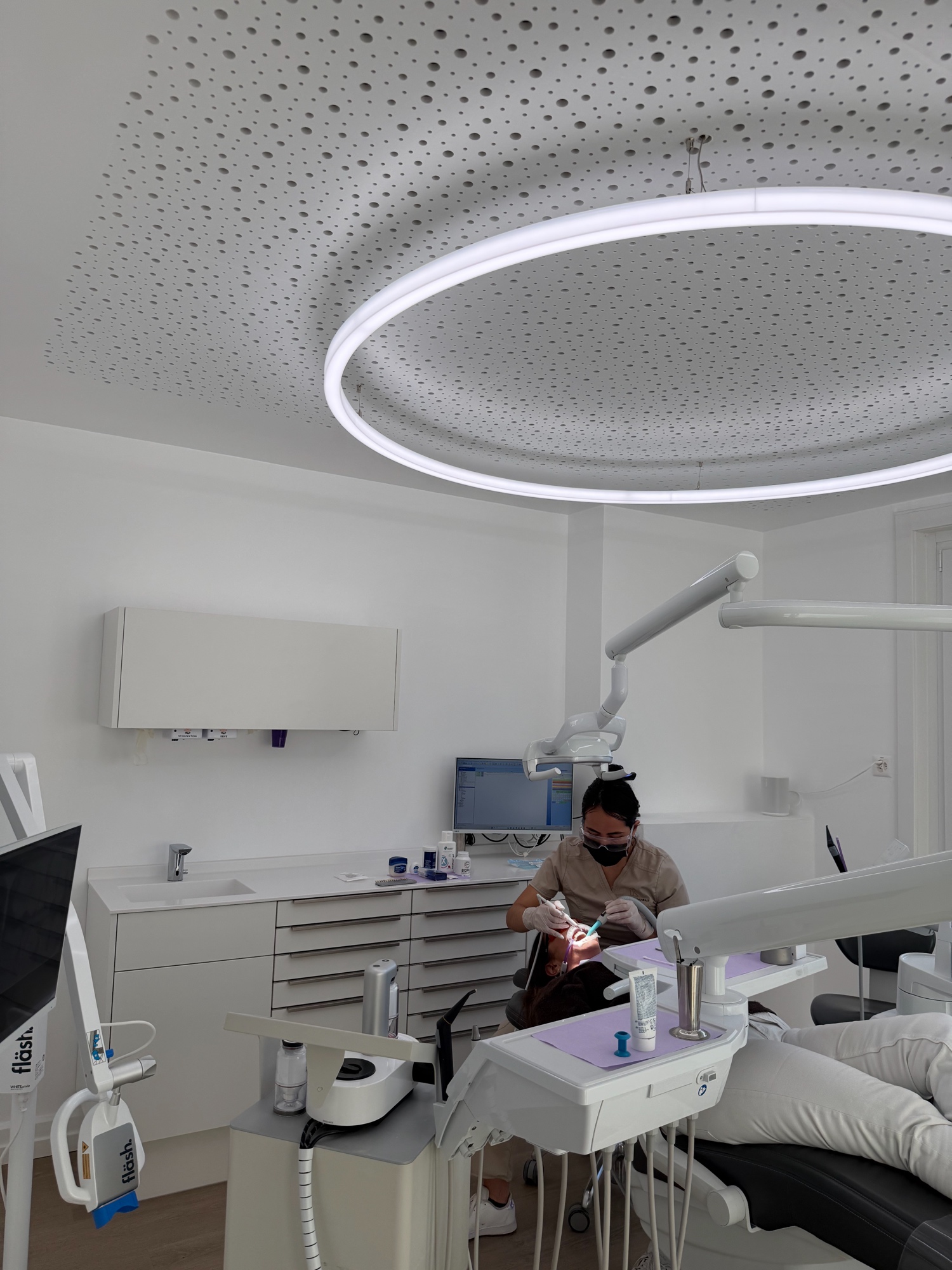
We also check how mobile the teeth are, how far the gums have receded and how much plaque there is. With digital X-rays from our Orthophos SL 3D, we assess how much bone has already been lost. For documentation, we also scan your teeth with the iTero intraoral scanner. This forms the basis of your personal treatment plan.
How we treat periodontitis
Treatment follows a step-by-step approach, as described in the guideline of the European Federation of Periodontology (EFP). How many steps are needed depends on the findings.
1. Initial treatment: reducing inflammation, improving oral hygiene
First, we remove plaque and tartar above the gum line. We show you how to clean your teeth effectively at home, especially the spaces between them. Your daily oral hygiene is the foundation for all further steps.
2. Cleaning the gum pockets
Next, we clean the root surfaces inside the gum pockets and remove biofilm and hard deposits (calculus) from them. This step is usually carried out under local anaesthetic. Depending on the findings, photodynamic therapy may also be used. If you feel tense about the treatment, treatment with nitrous oxide is available on request; you can find out more on our page for anxious patients.
3. Re-evaluation
After a healing phase, we measure the gum pockets again. This shows us where the inflammation has subsided and where pockets still need treatment.
4. Surgical and regenerative treatment, if needed
If deep pockets remain, a surgical procedure may be advisable. In flap surgery, the gum is carefully opened so that we can clean the root surfaces and bone defects under direct vision. For certain bone defects, the procedure can be combined with Emdogain® or with bone substitute materials to support the formation of new tissue. We assess on a case-by-case basis whether a defect is suitable for this.
Additional procedures at our practice
Photodynamic therapy (PDT)
In PDT, a light-sensitive dye is placed in the gum pocket and activated with light to target and damage bacteria. PDT is a complement to thorough mechanical cleaning of the pockets and does not replace it. We will discuss with you whether it makes sense in your case.
Emdogain®
Emdogain® is a gel containing enamel matrix proteins obtained from the developing teeth of pigs. It is applied to the cleaned root surface during flap surgery and is intended to support the regeneration of supporting tissue in suitable, deep bone defects.
Guided Biofilm Therapy (GBT)
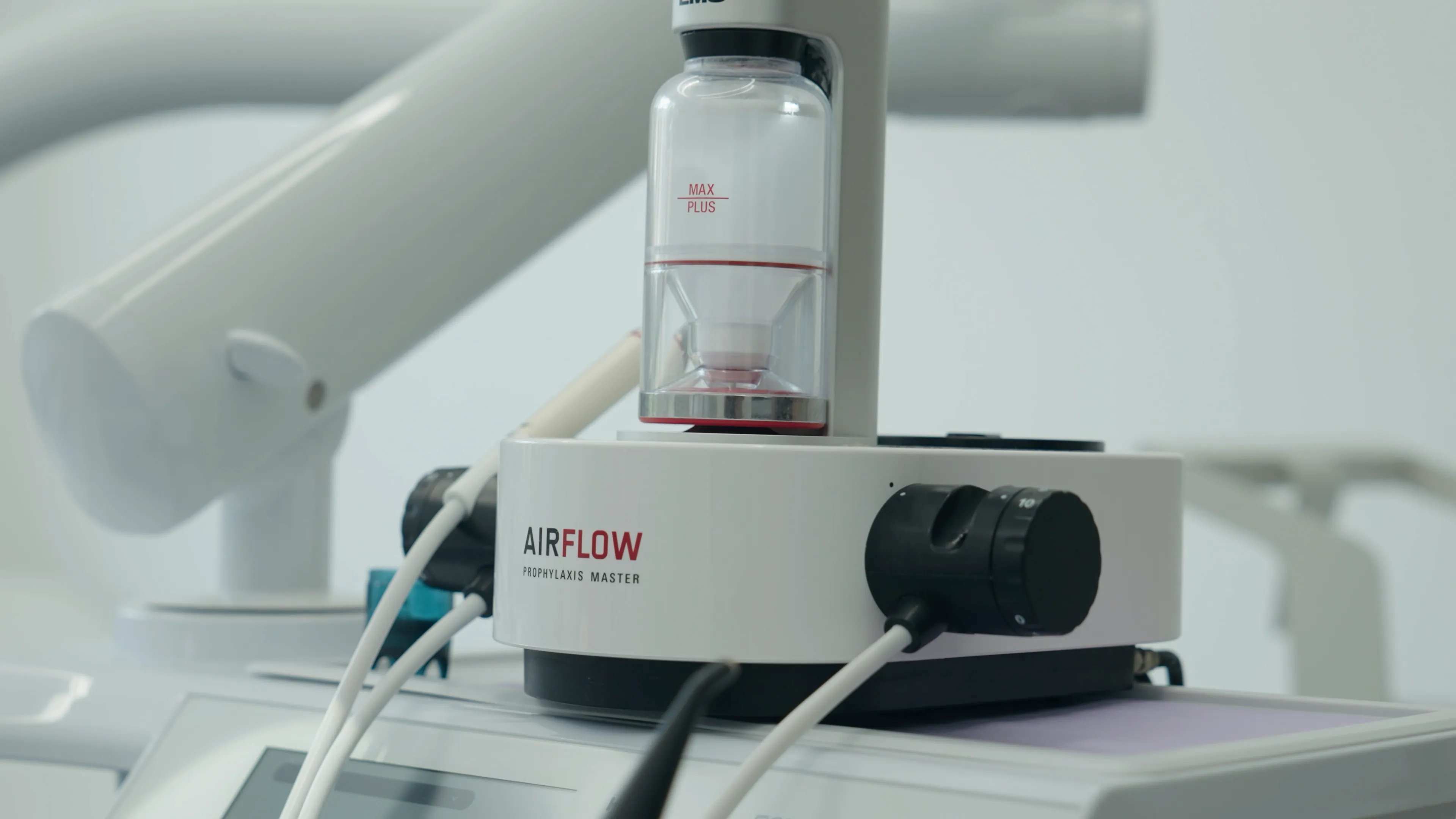
For professional cleaning, we work according to the Guided Biofilm Therapy concept from EMS. First, we stain the biofilm to make it visible and then remove it in a targeted way, using the AIRFLOW® Prophylaxis Master, among other devices.
Aftercare: keeping periodontitis under control in the long term
After active treatment comes a crucial phase: supportive periodontal therapy, also known as recall. Without regular care, the inflammation can flare up again. At aftercare appointments, we check the pocket depths, clean your teeth professionally and adjust your home care if necessary.
We set the intervals according to your findings and personal risk, usually between three and twelve months. You can read more about professional teeth cleaning on our page Dental hygiene and regular check-ups.
Costs and health insurance
The cost of periodontitis treatment depends on the findings, the number of teeth affected and the treatment steps needed. You can find our tariff point values online. On request, we can prepare a cost estimate for you in advance, either for your own information or to submit to your insurer.
In Switzerland, compulsory basic health insurance covers dental treatment only in very limited exceptional cases, for example for certain severe, unavoidable diseases of the masticatory system. Ordinary periodontitis is usually not one of them. Whether supplementary dental insurance covers part of the costs depends on your policy. It is best to check this with your insurer before treatment begins.
Frequently asked questions
Can periodontitis be cured?
Periodontitis usually cannot be cured completely, but with systematic treatment and consistent aftercare it can usually be brought to a standstill. Bone that has been lost does not grow back on its own. In suitable cases, regenerative procedures can rebuild some of it.
Does the treatment hurt?
Cleaning the gum pockets is usually done under local anaesthetic. Afterwards, your gums may be sensitive for a while. If you are anxious about the treatment, nitrous oxide is available at our practice.
Can I have an implant if I have periodontitis?
We treat any existing periodontitis before placing an implant, because an implant needs an environment free of inflammation. Regular aftercare is also important around dental implants.
What can I do myself?
Brush thoroughly twice a day, clean between your teeth every day with dental floss or interdental brushes, and keep your aftercare appointments.
Have you noticed bleeding gums, or would you like to have your gums checked? Visit us in Küsnacht, book an appointment online or contact us.
Appointments & advice
Questions, or ready to book an appointment?
Write to us and we will get back to you as soon as possible. Prefer to book online or give us a call? That works too.
Karamousli Dental Practice · Seestrasse 137 · 8700 Küsnacht